Marcelo Bielsa delivered a forceful critique of FIFA’s new midgame “hydration breaks,” arguing the pauses undermine football’s traditional flow and cultural identity. The 70-year-old Argentine coach, respected for his blunt observations and tactical intellect, said the breaks add little to the sport while introducing commercial and structural changes that alter how the game is experienced.
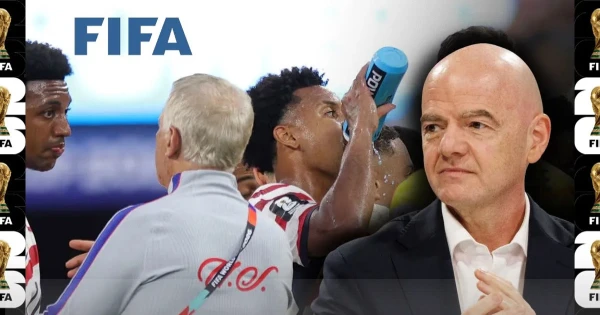
FIFA introduced the hydration breaks this year for matches held in host cities across the United States, Canada and Mexico, citing player safety during periods of high heat. The policy calls for two three-minute breaks per match, one in each half, to allow players to rehydrate and receive medical attention if needed. FIFA framed the measure as a medical and welfare precaution intended to protect players from heat-related illnesses.
Bielsa, long known for defending the sport’s traditional rhythms, said the stoppages transform a 90-minute contest into something resembling four quarters. In a press conference ahead of his side’s match with Cape Verde, he argued the breaks are not simply medical interventions but carry broader consequences. “Dividing the game in four instead of two changes the original nature of football, which was built culturally,” Bielsa said. He warned that such changes strip away qualities fans have historically loved about the sport.

His critique echoed concerns from other coaches, players and traditionalists who worry the interruptions will affect tactics, momentum and the viewing experience. Opponents of the breaks contend that scheduled stoppages create artificial pauses that disrupt sustained tactical battles, momentum shifts and unbroken sequences of play—elements many say define football’s appeal. Some also assert the breaks open the door to additional commercial time for broadcasters and advertisers.
FIFA has rejected the suggestion that the breaks are primarily commercial, maintaining they are a health-driven measure guided by medical advice and environmental monitoring. The governing body points to research on heat stress and the increased risk of heat-related conditions in extreme temperatures. FIFA’s implementation includes protocols for assessing local conditions, such as wet-bulb globe temperature, and empowering match officials to call the pause when thresholds are reached.
Bielsa acknowledged the value of some technological and medical advances in football, citing video assistant referee (VAR) as an example of useful innovation. “We welcome technology like VAR; it expands possibilities,” he said, noting the distinction between tools designed to correct injustice and interventions he views as altering the sport’s character. He suggested the hydration breaks have motivations beyond pure welfare and said his views align with others in the game who have expressed unease.
Sports scientists and player welfare experts emphasize that heat-related health risks are real. Heat exposure can increase the likelihood of exertional heat illness, which ranges from cramps and exhaustion to potentially life-threatening heat stroke. Medical guidelines for sports in hot environments often recommend hydration, cooling strategies, and monitoring, but they vary on the best in-game implementation. Some teams and leagues use pre-game cooling, sideline medical tents and substitution policies to help players without scheduled midhalftime pauses.
Broadcasting partners have also adapted to the new breaks, using the windows for analysis, extended commentary and, in some cases, advertising. This has raised additional concerns among critics who see an overlap between welfare-driven timeouts and commercial opportunity. League officials and broadcasters have argued the spaces can be used productively for fan engagement, tactical review, and player care, but detractors say those benefits do not negate the impact on the sport’s continuity.
Several national team managers have publicly weighed in with mixed reactions. Some prioritize player safety above all and welcome a standardized approach to heat management. Others worry about tactical implications and the precedent set for future interruptions. The debate highlights a broader tension in modern sport: balancing athlete welfare and technological progress with preserving tradition and the viewing experience.
As major tournaments increasingly take place in varied climates and under intense broadcast scrutiny, governing bodies face pressure to ensure player safety while keeping the game intact. Some football administrators are exploring alternative approaches, such as flexible kick-off times, improved stadium cooling and more rigorous pre-match medical screening, which could reduce the need for in-play stoppages.
Bielsa’s comments are likely to intensify the conversation around how football evolves in response to climate challenges and commercial pressures. His stature in the sport gives weight to the argument that changes should be scrutinized for their broader cultural impact, not just their immediate practical aims.
The debate over hydration breaks exemplifies a larger conversation about how football governs change: who sets the rules, how medical evidence is weighed against tradition, and how commercial interests intersect with player welfare. FIFA and stakeholders will continue to monitor the policy’s outcomes, including player health metrics, match flow data and feedback from teams and broadcasters. Any future adjustments will hinge on that evidence and on growing public and professional responses like Bielsa’s.