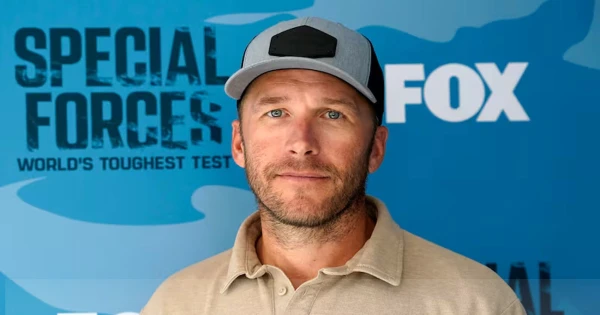
The world of competitive skiing was stunned this week as six-time Olympic medalist Bode Miller, widely regarded as the greatest male American alpine ski racer in history, was arrested in eastern Idaho on drug-related charges. The 46-year-old athlete was taken into custody by the Fremont County Sheriff’s Office after law enforcement officials allegedly discovered psilocybin mushrooms, a controlled substance, in his possession.
According to court documents obtained by local authorities, a sheriff’s deputy encountered Miller and subsequently found him with a "white dispensary bag" containing approximately 4.1 grams of the psychedelic substance. The arresting officer noted in the official report that Miller was aware the mushrooms were illegal under Idaho state law, which maintains some of the strictest drug possession penalties in the country.
Miller has since been formally charged with two misdemeanor counts: possession of a controlled substance and use or possession of drug paraphernalia. Following the arrest, he was booked into the Fremont County Jail, where a bond of $5,000 was set. He was able to post the required bail and was released from custody later that day. His legal team entered a plea of not guilty on his behalf, signaling that the champion intends to contest the allegations in court.

The news of Miller’s arrest has sent ripples through the sports community, given his iconic status and his clean public image throughout his career. The Fremont County legal system has scheduled a pre-trial hearing for July 29, where the case will proceed. If convicted on both misdemeanor counts, Miller could face a maximum penalty of up to one year in a local jail facility and a fine of $1,000, although sentencing guidelines often vary based on prior criminal history and the specifics of the case.
Miller’s legacy in the world of alpine skiing is unparalleled among American athletes. Rising from a modest background in New Hampshire, he carved a path of dominance that redefined the sport. His aggressive, fearless racing style earned him the nickname "The Bad Boy of Skiing," yet his technical skill consistently put him on the podium at the highest levels of international competition.
Throughout his illustrious career, he secured six Olympic medals, a collection that includes one gold, three silvers, and two bronzes spanning the 2010 Vancouver Winter Games and the 2014 Sochi Winter Olympics. He is also celebrated for his World Cup achievements, winning the overall World Cup title in 2005 and again in 2008, a feat that remains a benchmark for U.S. skiers. Beyond his Olympic hardware, Miller boasts numerous World Championship gold medals, solidifying his reputation as one of the most talented skiers to ever navigate the world’s most treacherous slopes.
Despite retiring from professional racing, Miller has remained a prominent figure in the public eye, working as a commentator and analyst for NBC Sports during the Winter Olympics and contributing to various charitable causes. He also appeared in reality television, notably participating in "Celebrity Big Brother," where he showcased a more reserved and thoughtful side compared to his aggressive racing persona.
His biography on various speaker platforms highlights his transition from athlete to public speaker, where he discusses topics ranging from overcoming adversity to maximizing human potential. However, this recent legal entanglement threatens to overshadow those post-athletic endeavors.
The state of Idaho enforces stringent drug laws, particularly regarding Schedule I controlled substances, which include psilocybin. Unlike some other states that have decriminalized or legalized the substance for therapeutic or recreational use, Idaho has not adopted such lenient measures. The laws in Fremont County, which borders Yellowstone National Park and is a rural, conservative jurisdiction, are enforced rigorously.
Miller’s legal representation has not issued an extensive public statement regarding the specifics of the arrest, but the "not guilty" plea suggests they plan to challenge the evidence or the circumstances of the traffic stop that led to the search. Legal experts following the case note that the relatively small amount of the substance—4.1 grams—often leads to plea deals or reduced charges, though the district attorney’s office has not indicated whether they are considering such an offer.
As the July 29 hearing approaches, fans and critics alike are watching closely. The outcome of this case will likely influence public perception of Miller’s post-athletic legacy. For now, the ski legend remains free on bond, awaiting his day in court. The proceedings will not only determine his legal fate but also serve as a definitive chapter in the narrative of a complex athlete who has experienced the highest highs of victory now facing the sobering reality of a legal battle.