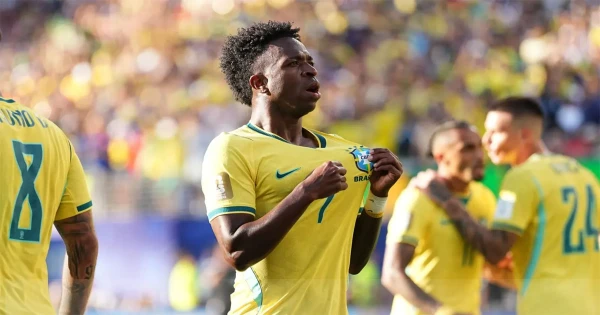
The Scotland national team is preparing for what could be the most significant match in the country’s football history as they prepare to face Brazil in their final Group C fixture at the 2026 World Cup. A draw against the five-time champions on Wednesday in Miami would be enough to secure Scotland’s passage to the knockout rounds for the first time ever. Even a narrow defeat might still be sufficient for Steve Clarke’s side to advance as one of the eight best third-placed teams.
The weight of history hangs heavily over this encounter. Scotland have never beaten Brazil in 10 previous meetings across all competitions, with eight losses and two draws. Their last result against the South American giants came in a 0-0 stalemate at the 1974 World Cup, a tournament where Scotland exited on goal difference despite remaining undefeated. The four World Cup meetings since then have all ended in Brazilian victories, including the 1998 tournament opener in Paris where Tom Boyd’s unfortunate own goal decided a 2-1 contest.
A History of Heartbreak and Near Misses
Scotland’s history against Brazil is defined by agonizing moments and missed opportunities. In 1974, Billy Bremner came agonizingly close to securing a famous victory in Frankfurt, only to see his close-range effort roll inches wide off his shin. The 1982 meeting in Seville saw Scotland take a shock lead through Dave Narey’s stunning strike before a brilliant Brazilian side featuring Zico, Eder, and Falcao stormed back to win 4-1. The 1990 encounter in Turin was settled when Muller pounced on a Jim Leighton fumble, while Maurice Johnston was denied by a brilliant Claudio Taffarel save in the closing moments. These moments of heartbreak have become part of Scottish football folklore, and the current squad is determined to rewrite that narrative.

The Stakes and Permutations
Scotland currently sit on three points from their two matches, having opened with a victory over Haiti before falling to Morocco. The equation is relatively straightforward for Clarke’s men: avoid defeat against Brazil and they will almost certainly progress. A win would secure their place in the round of 32, potentially even as group winners if Morocco fail to beat Haiti. A draw would take Scotland to the four-point mark, which has historically proven sufficient for qualification in expanded tournament formats. Even a one-goal loss could keep Scotland in contention, though they would face an anxious wait to see how other groups unfold.
Brazil’s Vulnerabilities
While Brazil remain favorites on paper, this iteration of the Selecao has shown vulnerabilities that Scotland could potentially exploit. Carlo Ancelotti’s side qualified from the competitive CONMEBOL region with eight wins, four draws, and six losses from 18 matches, shipping 17 goals in the process. Their qualification campaign was far from convincing, with victories over Chile, Peru, and Colombia all arriving in the final minutes of those matches. They also suffered defeats to Uruguay, Colombia, Paraguay, Bolivia, and Argentina twice. In their World Cup opener, Brazil were held to a 1-1 draw by Morocco, requiring a moment of individual brilliance from Vinicius Junior to salvage a point. Ancelotti admitted after that match that his team was anxious and struggled to find rhythm.
The five-time champions also face significant injury concerns. Neymar has been sidelined with a calf injury and his fitness remains uncertain, though there is speculation he could feature against Scotland either as a starter or from the bench. The team’s over-reliance on Vinicius Junior has been identified as a concern, while the right-back position remains problematic following injuries to regular options. These weaknesses have not gone unnoticed by Scotland’s coaching staff.
Team Selection Decisions
Clarke faces several critical selection dilemmas ahead of the match. Aaron Hickey’s injury has created a vacancy at right-back, where Scotland will need to contend with the pace and trickery of Vinicius Junior. Nathan Patterson and Anthony Ralston are options, while Kieran Tierney could be deployed in that role given his vast experience. The central defensive partnership is another area of scrutiny, with Grant Hanley’s positioning coming under question following Morocco’s early goal in their previous match. Scott McKenna could come into contention if he has recovered from a calf issue.
The forward line presents perhaps the most difficult decision. Che Adams has started both matches but has struggled for service and impact, managing only three touches in the opposition box. Lyndon Dykes offers a more physical presence and could be preferred for his aerial ability against Brazil’s center-backs Marquinhos and Gabriel Magalhaes. Lawrence Shankland, Ross Stewart, and George Hirst are the other contenders for the starting role. There is also the possibility of deploying Scott McTominay further forward, though assistant manager Steven Naismith has downplayed that prospect.
Ben Gannon-Doak has emerged as Scotland’s most dangerous attacking threat, with his pace and crossing ability causing problems for opponents. The 20-year-old has been utilized off the bench in previous matches, but there is growing support for his inclusion in the starting lineup against Brazil. His potential impact could be crucial in stretching Brazil’s defense and creating opportunities.
Tactical Approach
Clarke must find a balance between defensive solidity and attacking ambition. Scotland cannot afford to be overly passive against a Brazilian side that thrives on possession and creativity. Former internationals Neil McCann and Leanne Crichton have both suggested that Scotland should embrace the challenge and play with more attacking intent than they have displayed in their previous matches. McCann argued that Scotland looked dangerous in qualifying when they adopted a more progressive approach, while Crichton emphasized the importance of sustaining attacks and making better decisions in the final third.
The psychological challenge of playing for a draw has been identified as a potential pitfall. Craig Levein, who managed Scotland in a similar situation against the Czech Republic in 2010, warned that playing for a result can be dangerous because it can be difficult to shift mindset if a goal is conceded. He emphasized that Clarke’s demeanor and team selection will be more influential than external talk of permutations. The inclusion of an attacking player like Gannon-Doak would send a clear signal that Scotland intend to be more aggressive.
The Dream Scenario
Scotland’s supporters have turned Boston into their own personal celebration site during the tournament, and they are hungry for more. The Tartan Army’s passion and commitment have been praised by officials in Massachusetts, and they will be out in force in Miami hoping to witness history. For a nation that owes its football heritage to Charles Miller, the son of a Scottish immigrant who introduced the game to Brazil, victory would represent a poetic full circle moment.
Scotland have waited 28 years to return to the World Cup stage, and they have a chance to make that wait worthwhile. A win over Brazil would not only secure qualification but would also mark one of the greatest results in the nation’s football history. As Andy Robertson and his teammates prepare for the game of their lives, the message is clear: this is Scotland’s moment, and they must seize it.