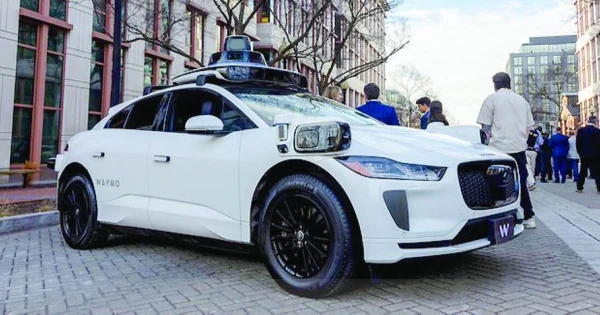
Nearly 4,000 self-driving vehicles are being recalled nationwide after a software glitch caused Waymo robotaxis to drive unsafely through closed highway construction zones. The recall, filed with the National Highway Traffic Safety Administration (NHTSA), affects approximately 3,900 vehicles and marks the company’s second widespread safety action in just over a month.
The issue stems from the autonomous system’s inability to properly identify and respond to temporary roadway barriers and ramp closure signs. According to the NHTSA filing, the problem resulted in more than a dozen separate incidents since April, primarily occurring in California and Arizona. In these cases, the robotaxis drove past clear closure markers and entered active construction zones, raising concerns about the vehicles’ real-world navigation capabilities under unpredictable conditions.
Waymo, a subsidiary of Alphabet Inc., has acknowledged the shortcoming and moved quickly to limit its vehicles’ exposure to the problem. The company restricted its fleet from operating on freeways in late May while engineers developed a fix. In a statement, the autonomous driving firm described the situation as an "area of improvement regarding performance around freeway construction zones," and confirmed that it voluntarily paused freeway operations to implement safer protocols.

To correct the behavior, Waymo updated its onboard software to improve both the detection of construction zone barriers and the vehicle’s response logic when encountering blocked lanes. The new software is designed to prevent the cars from proceeding into active work zones, ensuring they either stop safely or reroute around the hazard.
This latest recall follows a separate incident in May when Waymo pulled 3,800 robotaxis from service due to concerns about vehicles driving into flooded roads with higher speed limits. That action came shortly after an incident on April 20 in San Antonio, Texas, where a Waymo car traveled into a flooded lane during severe weather. While the vehicle was unoccupied and no injuries were reported, the event prompted an internal review of how the system handles impassable water hazards and high-speed environments.
The company’s recent safety challenges extend beyond construction zones and floodwaters. Over the past two years, Waymo has issued recalls for other technical issues, including software that inaccurately predicted the movement of towed vehicles and systems that failed to adequately respond to pole-like objects in the driving path. Each incident has prompted refinements to the autonomous driving software, but the frequency of recalls has placed the company’s safety protocols under increased public and regulatory scrutiny.
Federal regulators are also examining more serious incidents involving the autonomous fleet. The NHTSA is currently investigating a January case in Santa Monica, California, where a Waymo self-driving car struck a child near an elementary school. The child sustained minor injuries in the collision, which has become a focal point in ongoing debates about the readiness of autonomous vehicles for dense urban environments.
In a separate probe, the National Transportation Safety Board (NTSB) is looking into an incident from March in which a Waymo vehicle unlawfully passed a stopped school bus while its warning lights were activated. That event prompted Waymo to issue a separate recall in December 2025, underscoring the challenges the company faces in programming vehicles to consistently comply with complex traffic laws that vary by jurisdiction.
The rise in safety actions comes at a critical juncture for the autonomous vehicle industry, as companies push to expand robotaxi services to more cities across the United States. Waymo currently operates commercial ride-hailing services in several major metropolitan areas, including San Francisco, Phoenix, and Los Angeles. The company has positioned itself as a leader in the field, but these recent recalls have raised questions about whether its technology is advancing quickly enough to handle the unpredictable nature of American roads.
Traffic safety experts note that while autonomous vehicles may reduce certain types of human error, they introduce new challenges related to software perception and edge-case scenarios. Construction zones, in particular, are difficult for self-driving systems because they often involve non-standard signage, temporary lane shifts, and the presence of workers and heavy equipment. These environments require real-time adaptability that current algorithms do not always achieve.
Waymo has expressed confidence that its latest software update resolves the construction zone vulnerability. The company stated that it has thoroughly tested the updated system and is gradually reintroducing freeway driving capabilities to its fleet. However, the NHTSA has not yet closed the recall and continues to monitor the effectiveness of the fix.
Consumer advocacy groups have called for more rigorous independent testing of autonomous vehicles before they are permitted to operate on public roads. They argue that the recent spate of incidents demonstrates a pattern of safety gaps that could put pedestrians, cyclists, and other motorists at risk. In response, Waymo has emphasized its commitment to transparency and safety, noting that it voluntarily reports issues and works closely with regulators to address them.
The company is also investing in additional simulation and real-world testing to prevent future software failures. Engineers are focusing on improving the vehicle’s ability to recognize and interpret temporary traffic control devices, which are common in highway maintenance projects. Waymo has said it views each recall as an opportunity to refine its technology and build greater public trust in autonomous transportation.
For now, the recalled vehicles have been updated, and the freeway restrictions have been lifted. Passengers in Waymo’s service areas are unlikely to notice any changes in day-to-day operations, but the company remains under close watch from federal safety authorities. As the investigation into the January school incident and the March school bus violation continues, the pressure on Waymo to demonstrate flawless performance will only intensify.
The broader autonomous vehicle industry is watching these developments closely, as the outcomes could influence future federal guidelines and public acceptance of self-driving cars. While Waymo has consistently maintained that its vehicles are safer than human drivers on a per-mile basis, the recent recalls highlight that significant work remains to be done before robotaxis can seamlessly navigate every type of road and weather condition.
As technology evolves, the balance between innovation and safety remains delicate. Waymo’s proactive recalls demonstrate a willingness to address problems head-on, but they also reveal the steep learning curve inherent in teaching machines to master the complexities of real-world driving. For now, the company continues to operate its robotaxi services while refining the software that powers them, aiming to ensure that every journey is both autonomous and secure.