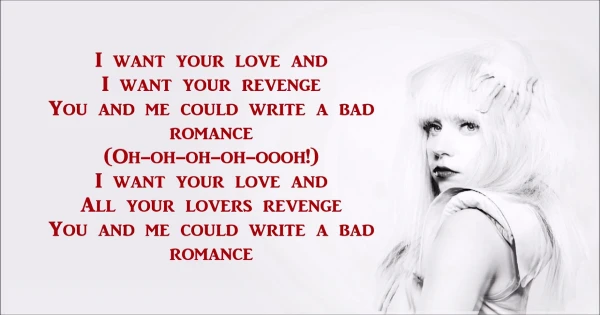
In the autumn of 2009, the pop music landscape shifted on its axis. Lady Gaga, already a rising star with a string of hits, unleashed "Bad Romance" upon the world. It was more than just a single; it was a cultural event that redefined the scope and ambition of pop music for a new decade. The song's immediate impact was undeniable, but its lasting legacy as a groundbreaking piece of art is what solidifies its place in music history.
The track was the lead single from Gaga’s third EP, The Fame Monster (2009), a project that served as a darker, more experimental companion to her smash-hit debut, The Fame . While her earlier work explored the highs of fame and hedonism, The Fame Monster delved into the paranoia, loneliness, and darker aspects of celebrity that Gaga experienced while touring . "Bad Romance" was born from these feelings, exploring the unsettling attraction to unhealthy relationships . Co-written and produced with her frequent collaborator RedOne, the song was penned by Gaga on her tour bus, inspired by the German techno and house music she had been exposed to in Eastern Europe .
Musically, "Bad Romance" was a departure from the more straightforward electro-pop of her early work. It featured a harder, more industrial edge with a pulsing beat, a spoken-word bridge, and a hook built on the now-iconic, nonsensical refrain: "Rah-rah-ah-ah-ah, Roma-roma-ma, Gaga-ooh-la-la" . The lyrics, meanwhile, were a masterclass in blending desire with danger, famously name-checking Alfred Hitchcock films like Psycho, Vertigo, and Rear Window in a single verse . This fusion of stark Euro-pop production with dark thematic content created a sound that was both fresh and instantly captivating.
Lady Gaga's Decade-Old 'Bloody Mary' Rises Again: How a 2011 Deep Cut Became a 2023 Chart Smash


"Bad Romance" was an immediate commercial juggernaut, topping the charts in over 20 countries and selling an astounding 12 million copies worldwide, making it one of the best-selling singles of all time . In the United States, it achieved a peak of number two on the Billboard Hot 100, held from the top spot by other massive hits of the era . Despite not reaching number one in her home country, its sales and cultural footprint were monumental, eventually being certified 11 times platinum by the RIAA . It also made history in the UK, where Gaga became the first solo female artist to have three number-one singles in a single calendar year .
However, the song’s true genius was fully realized in its music video, directed by Francis Lawrence . A surreal, high-fashion cinematic spectacle, the video featured Gaga being kidnapped by supermodels, drugged, and sold into sex slavery before she exacts a fiery revenge on her captor . The visual was a landmark moment for the music industry, blending high-concept storytelling, elaborate choreography, and a parade of unforgettable, avant-garde costumes designed by the late Alexander McQueen and the artist's own creative team, the Haus of Gaga . The video was a critical smash, winning seven MTV Video Music Awards—including Video of the Year—and a Grammy for Best Music Video . In 2018, Billboard named it the greatest music video of the 21st century .
Beyond its sales and awards, "Bad Romance" was a turning point in pop culture. It solidified Lady Gaga's identity as a pop art provocateur and "Mother Monster," establishing a new template for the modern pop star as a multimedia artist . The song's blend of accessible pop hooks with a dark, club-influenced production helped pave the way for a new wave of pop music in the 2010s, and its influence can still be felt in the work of countless artists today .
"Bad Romance" was the moment where Lady Gaga’s artistic ambition and commercial appeal achieved perfect symbiosis. A decade and a half after its release, the song remains a touchstone of 21st-century pop, a testament to the power of embracing the weird, the dark, and the spectacular, proving that a "bad romance" could be the best thing to ever happen to music.