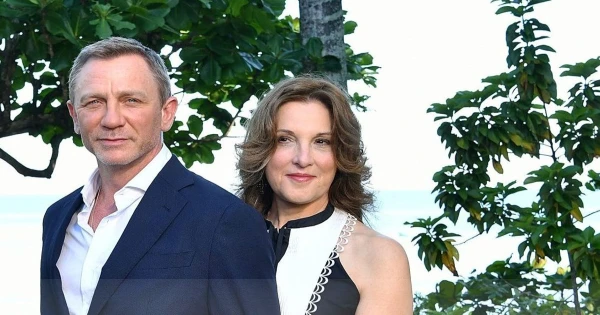
For decades, the world has known her as the guardian of the world’s most famous spy. Yet, behind the title of "the woman who protects James Bond" lies a far more complex narrative—one of relentless ambition, quiet resilience, and the arduous task of stepping out from a giant’s shadow. Barbara Broccoli did not simply inherit a franchise; she had to fight for the right to lead it, battling industry skepticism and proving that her vision was driven by talent, not just lineage.
Born on June 18, 1960, in Los Angeles, Barbara was destined for the movie business. Her father, Albert R. Broccoli, was the legendary producer who brought Ian Fleming’s novels to the silver screen. Her childhood was not spent in classrooms alone but on the soundstages of Pinewood Studios, where she watched her father craft the magic of 007. She pursued formal studies in film and television, but her real education came from the ground up. As a teenager, she joined the publicity department for The Spy Who Loved Me, marking her first official step into the franchise that would one day depend on her.
However, breaking into Hollywood under the Broccoli name was a double-edged sword. While it opened doors, it often slammed them shut just as quickly. Many assumed her position was a gift rather than a merit. She was acutely aware of the whispers that followed her: the narrative that she was merely a producer’s daughter playing producer. Barbara was determined to dismantle that perception, not with words, but with relentless work and an unyielding commitment to quality.

For years, she labored behind the scenes, honing her craft. She climbed the ranks methodically, serving as an assistant director and associate producer. She learned every nuance of production, ensuring she was never the weakest link on set. Her tenacity paid off in 1995 when she and her half-brother, Michael G. Wilson, took the helm as the primary producers of the James Bond series. At that time, the franchise was at a critical crossroads. The Cold War had ended, and the world was unsure if a relic like Bond could remain relevant. Broccoli’s gamble on GoldenEye proved that the spy still had a place in the modern era, reinvigorating the series and silencing the doubters who had written the franchise off.
Broccoli’s career is defined by her readiness to take significant risks. Her most controversial—and ultimately vindicated—decision came during the casting of the 21st Bond film. When she selected Daniel Craig to assume the iconic role, the internet and tabloids erupted in fury. Critics claimed he was too blond, too rugged, and too far removed from the suave silhouette of his predecessors. Yet Broccoli stood by her choice, stating that Craig’s physicality and depth would bring a raw, visceral edge to Bond that audiences had never seen. The release of Casino Royale proved her right, cementing Craig’s place as one of the best Bonds in history and solidifying her reputation as a producer with a unique ability to see the future of cinema.
Her journey was not without its corporate battles. In 2022, when Amazon acquired MGM Studios, the entertainment giant attempted to assert more control over the creative direction of the Bond universe. Broccoli, however, viewed the franchise as more than just another piece of content; she saw it as a cultural heritage. For years, she clashed with executives over the soul of the character, resisting corporate pressures to produce spin-offs or dilute the integrity of the source material. She maintained that Bond was a cinematic event, not a streaming commodity. This fight for creative sovereignty continued until 2025, when she and Wilson finally stepped back from their full creative control, a move that signaled a seismic shift in the franchise’s history but underscored her unwavering commitment to preserving its legacy.
Throughout her tenure, Broccoli has navigated complex social conversations regarding the character’s identity. When debates raged about Bond’s gender, she remained clear and decisive. She asserted that Bond is a specific character written as a man and that it is more important to create powerful, original roles for women rather than simply recasting an existing icon. This position has sparked considerable debate but highlights her deep-seated respect for the character’s creation and her forward-thinking approach to representation in cinema.
The financial success under her stewardship is staggering. Films such as Skyfall, Spectre, and No Time to Die have crossed the billion-dollar mark, with Skyfall becoming the first Bond film to achieve that milestone. With industry outlets estimating her net worth in the hundreds of millions, Barbara has proven that she is not just a keeper of the flame but a creator of her own financial empire. Her vision has often been called the fuel that kept the franchise engine running smoothly through turbulent decades, adapting to cultural changes while staying true to the explosive, stylish heart of the series.
Ultimately, Barbara Broccoli’s narrative is not merely one of dynastic succession. It is a story of a woman who used her father’s foundation to build a skyscraper of her own design. By taking risks, defending the franchise from corporate homogenization, and delivering critical hits that resonated with global audiences, she has secured her own place in Hollywood history. She is not just the daughter of a legend; she is a legend in her own right, a resilient producer who proved that the only thing more powerful than a famous name is the determination to create a legacy that is entirely your own.