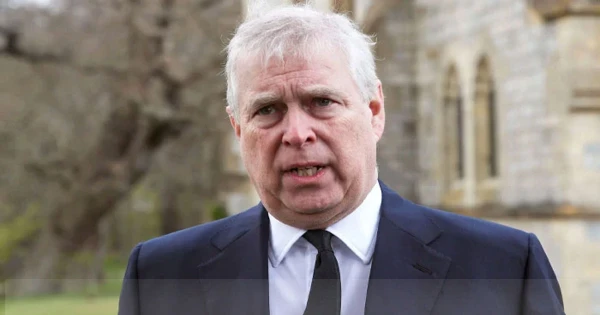
Andrew Mountbatten-Windsor, the former Duke of York, remains on a confidential government list entitling him to a royal ceremonial funeral despite being stripped of his titles and royal status over his ties to convicted sex offender Jeffrey Epstein, according to a report that has sparked widespread outrage. The Mail on Sunday revealed over the weekend that the 66-year-old is still covered by the Cabinet Office's long-standing "bridge" planning arrangements, which set out meticulous funeral protocols for senior members of the Royal Family years in advance.
Buckingham Palace and the Cabinet Office declined to comment when approached about the reported plans. Royal historian Rafe Heydel-Mankoo told GB News that the arrangements have "not yet been updated," suggesting that any changes are unlikely under King Charles's reign and may ultimately fall to Prince William instead. "Issues around his funeral are not going to be made until King William is on the throne – and we know that the Prince of Wales has adopted the harshest of attitudes towards his uncle," Heydel-Mankoo explained.
The revelation comes after a dramatic fall from grace for the King's younger brother. Charles stripped Andrew of his HRH style and princely title in October 2025 following renewed scrutiny from the release of thousands of pages of Epstein-related documents by the U.S. Department of Justice. Andrew had already stepped back from public royal duties in 2019 and lost his military affiliations and patronages following his disastrous BBC Newsnight interview about his friendship with Epstein. In February 2026, he was arrested on suspicion of misconduct in public office and later released without charge while under investigation. He has repeatedly denied all wrongdoing, including accusations from the late Virginia Giuffre, an Epstein victim who alleged she had sex with the then-prince on three occasions.

Why this matters
The controversy highlights the unique and often awkward position of disgraced royals within an institution built on tradition and continuity. While Andrew has been pushed to the margins—forced to leave the sprawling Royal Lodge for a modest farmhouse on the Sandringham Estate—the government's funeral protocols appear to have maintained his ceremonial standing, effectively treating him as a royal in death even as he is treated as a private citizen in life. Critics argue this sends a damaging message to victims of abuse and raises uncomfortable questions about the monarchy's ability to fully sever ties with figures who have brought the institution into disrepute.
Royal experts have speculated that any service could be held at St George's Chapel in Windsor Castle, where Queen Elizabeth II and Prince Philip were laid to rest, with burial at the Royal Burial Ground at Frogmore. Edward VIII, who abdicated in disgrace in 1936, is also buried there alongside his wife Wallis Simpson. However, the precise details of Andrew's arrangements remain unclear, and the plans are understood to be under constant review by the Cabinet Office.
The reported plans have drawn fierce criticism from politicians and legal representatives of Epstein's victims. U.S. attorney Gloria Allred, who has represented 27 of Epstein's victims, questioned why Andrew should be afforded such an honor. "Andrew has brought disgrace upon the Royal Family and the UK as a result of his involvement with Jeffrey Epstein," Allred said. "What kind of message would such a ceremony send to Epstein's victims?" Conservative shadow Home Office minister Alicia Kearns called for the plans to be "revoked immediately," adding that "there are no circumstances under which Andrew should be afforded a royal funeral". Taxpayer funding for the event has also been a flashpoint, with critics noting that ceremonial funerals often require costly security and policing operations paid for by the public.