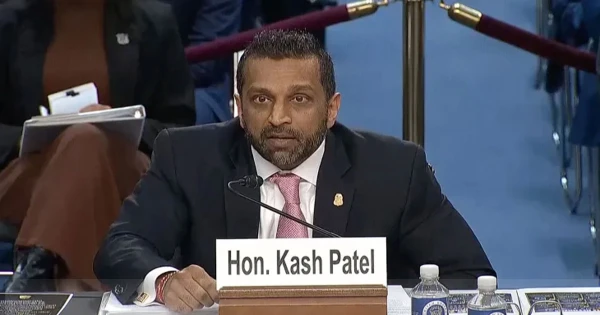
FBI Director Kash Patel faced pointed, bipartisan questioning during a Senate hearing after lawmakers pressed him to explain what they described as the bureau’s loosening of hiring requirements—an exchange that left both Republicans and Democrats openly incredulous, according to reports.
The hearing, which was focused on FBI oversight, shifted abruptly when senators raised concerns that changes to recruitment standards could affect the bureau’s ability to vet and prepare new agents and professional staff. Patel was forced to defend the approach in real time as lawmakers signaled they were unconvinced that relaxing any requirements would strengthen the agency’s long-term readiness.
Several senators from both parties reacted with visible disbelief as the discussion unfolded, turning what is typically a structured question-and-answer session into what observers described as an unusually awkward moment. The surprise was not simply that hiring standards had become a central topic, but that it did so in a way that appeared to catch members of the committee—and Patel—off guard.
While details of the specific requirements under debate were not fully laid out during the exchange, the political dynamic was clear: lawmakers who often disagree sharply on FBI priorities aligned in expressing skepticism about any move that could be perceived as lowering the bar for entry into an agency tasked with counterterrorism, counterintelligence, and complex criminal investigations.
Patel defended the bureau’s direction, arguing the FBI still needs to meet its staffing demands while maintaining public trust. Senators, however, signaled concern that changes meant to broaden the applicant pool could have unintended consequences, including raising questions about qualifications and consistency in screening.
The dispute lands at a time when many federal law enforcement and intelligence agencies face a fiercely competitive recruiting environment, especially for candidates with in-demand technical skills. Across government, agencies have increasingly had to compete with the private sector on pay, flexibility, and career mobility—pressures that can fuel internal debates over how to attract enough qualified applicants without compromising standards.
At the same time, the FBI remains under intense scrutiny from Congress, with oversight hearings frequently becoming flashpoints over the bureau’s leadership decisions and operational priorities. That backdrop helps explain why even incremental changes in hiring policy can quickly become a political controversy on Capitol Hill.
Why this matters
The FBI’s hiring standards sit at the intersection of public safety and public confidence: the bureau must recruit enough people to meet mission demands, but it also has to reassure Congress and the public that vetting and preparedness are not being diluted. In an era of heightened concern over cyber threats and national security, the agency’s ability to attract skilled applicants is increasingly central to its effectiveness. Bipartisan alarm in a public hearing suggests hiring policy may become a larger oversight issue moving forward.
The hearing ended with senators making clear they expect further explanation of the bureau’s rationale and guardrails around any revised requirements, underscoring that the debate is unlikely to fade quickly.