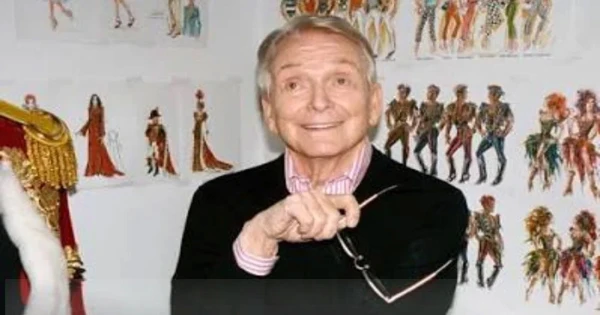
Bob Mackie, the visionary costume designer whose dazzling, sequin-drenched creations helped define the looks of superstars including Cher, Tina Turner, Dolly Parton and Elton John, died at age 87. The news broke Monday through an official statement on his Instagram account that paid tribute to a man who spent his entire life chasing his singular passion for fashion and costume design.
According to that statement and subsequent reports, Mackie lived his 87 years to the fullest. "He lived his 87 years to the fullest, fulfilling his dream of being a Fashion and Costume Designer, which is all he ever wanted to do," it read. "His genius and extraordinary designs will live on forever, continuing to bring beauty into this world."
His six-decade career brought him a Tony Award, nine Emmy Awards and three Oscar nominations. Mackie became forever linked with Cher, designing the dramatic Mohawk headdress, plumed showgirl elements and bare-midriff look she wore to the 1986 Academy Awards. The singer called it her "revenge dress," choosing the bold ensemble the year after she failed to receive an expected Oscar nomination for her role in the film "Mask." Cher reflected on that choice in the 2024 documentary "Bob Mackie: Naked Illusion."
In a 2010 BBC interview, Mackie said Cher "looked like no-one else in the entertainment business at the time" and that "everybody just went crazy over this woman as she could wear anything." His work for her also made history when she became widely recognized as the first woman to bare her midriff on American television. Those boundary-pushing designs arrived as the entertainment industry shifted dramatically. Mackie began his career during the rise of color television in the 1960s, when networks needed bolder, more visually striking costumes to captivate viewers on variety shows and live specials. That technological change created perfect conditions for his glittering, theatrical aesthetic to flourish.
Born Robert Gordon Mackie in Monterey Park, California, in 1939, he launched his professional life as a sketch artist for established costume designer Jean Louis. One early assignment required him to draw the now-iconic dress Marilyn Monroe wore while singing "Happy Birthday, Mr. President" to John F. Kennedy in 1962. The task connected him directly to one of the most indelible intersections of Hollywood glamour, music and American politics.
Mackie married singer and actress Lulu Porter in 1960. They divorced three years later and had a son, Robin, who died in his early thirties from an AIDS-related illness. Mackie shared a long-term relationship with Iranian fashion designer Ray Aghayan from 1963 until Aghayan's death in 2011. That personal story unfolded against the devastating backdrop of the AIDS epidemic, which took a heavy toll on creative communities in fashion, film and music throughout the 1980s and 1990s.
Even late in life, Mackie showed little interest in slowing down. In a 2018 interview with The Guardian, he described himself as "the oldest living designer in Hollywood" and responded to questions about retirement with a simple declaration: "I hope not."
Why This Matters
Mackie's death marks the end of an era in American pop culture when extravagant costume design helped turn performers into larger-than-life icons and transformed red carpets into major cultural events watched by millions. His work bridged the more restrained glamour of old Hollywood with the bold, colorful demands of television and concert stages, influencing everything from music videos to today's global fashion media economy. For U.S. audiences, his story also reflects the profound losses many in the creative industries endured during the AIDS crisis, even as artists like Mackie continued producing beauty and joy amid private grief.
The images he created will keep shining in retrospectives, awards show clips and stage performances for years to come.