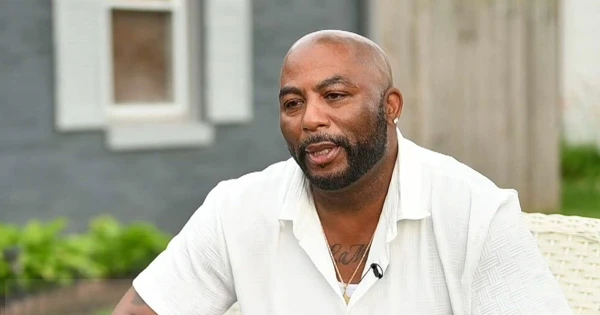
For the first time in nearly three decades, Tony Bailey holds the keys to his own future—both literally and figuratively. The 61-year-old great-grandfather spends his days behind the wheel of an IndyGo bus, navigating the streets of Indianapolis and reconnecting with a life he lost to a federal prison cell.
But that hard-won freedom is now under direct threat. Attorneys from the U.S. Department of Justice are actively working to reverse the sentence reduction that freed him in 2024, a move that could send him back to federal prison for the remainder of his life.
Bailey’s ordeal began with a series of catastrophic decisions in 1997. Along with two accomplices, he carjacked a UPS delivery truck and used the vehicle to rob a bank in Chesterfield, Indiana. Following the robbery, the men crashed their getaway car near a Pendleton cornfield. Desperate to escape, they broke into a nearby home, held a family at gunpoint, tied them up, and forced the homeowner to drive them to Indianapolis.
Supreme Court Clarifies Alito’s Remark to Sotomayor as a ‘Misunderstanding’ Amid Rising Tensions

Because the crime involved a firearm and Bailey had prior felony convictions, federal sentencing guidelines at the time mandated an exceptionally harsh penalty. The court handed down a 728-month sentence—effectively 61 years in prison. For a man then in his mid-30s, the ruling was essentially a death sentence behind bars.
"I know I made a mistake, but the good thing about it is I learned from my mistake," Bailey said, reflecting on the more than two decades he spent incarcerated at the federal penitentiary in Terre Haute. During his time inside, he focused on self-improvement and vocational training, determined to emerge a different man than the one who committed those crimes in 1997.
The turning point came with the passage of the First Step Act in 2018, a bipartisan criminal justice reform law signed by President Donald Trump. The legislation aimed to reduce excessively long federal sentences and give judges more discretion to review older cases that had been penalized under outdated, harsher sentencing regimes.
In 2024, U.S. District Judge Richard Young ruled that Bailey’s original sentence was unusually long and that he no longer posed a danger to the community. The judge granted Bailey’s request for a reduction, slashing the 61-year term to the 27 years already served. Bailey was released, returning home to his family, his eight grandchildren, and five great-grandchildren.
"I deeply regret the mistakes I made in 1997. I ain't the same person I was then," he said. The joy of his release was profound, allowing him to rebuild bonds with loved ones and to work a full-time, legitimate job—a far cry from the man who once hid in a cornfield.
That freedom, however, has proven fragile. The U.S. Attorney’s Office for the Southern District of Indiana has appealed Judge Young’s ruling. Prosecutors argue that the sentencing commission and federal judges exceeded their authority by retroactively applying new sentencing guidelines to inmates convicted under older, stricter laws. They contend the new rules were intended for future cases, not for resentencing individuals who had already been handed down final judgments.
Last week, an assistant U.S. attorney sent an email to Bailey’s legal team confirming the government’s intent to seek a reversal of his release. While an official motion has not yet been filed, the notice has alarmed Bailey, his attorneys, and his family. If the court sides with the government, Bailey could be forced to return to prison to serve out the remainder of his original 61-year sentence—a term that would likely keep him incarcerated for the rest of his life.
"The government's position is both legally questionable and morally indefensible," said John Gleeson, a former federal prosecutor and judge who now represents Bailey through The Holloway Project, a program dedicated to reducing what he calls "brutal and excessive" sentences. Gleeson notes that if Bailey were sentenced today for the same crimes, he would almost certainly receive a far shorter term. For context, the average federal sentence for murder in 2025 is approximately 24 years—less time than Bailey has already served.
Prosecutors have maintained that Bailey’s crimes were "heinous" and left "permanent scars on his victims." In previous court filings, the U.S. Attorney’s office also warned that cutting Bailey’s sentence in half could create "confusion and implicit deception" in the justice system. The office declined to comment on the pending case, citing a policy of only issuing official positions through court filings.
Bailey’s family, however, insists that the man who left prison is not the same man who entered it. Relatives describe him as a devoted father, grandfather, and a productive member of society. "He's a good man, a good father, and a good grandfather. He doesn't need to go back," said his cousin, Veronica Ownes. Another relative, Jocco Bailey, added that watching Tony thrive has been an inspiration, and the thought of sending him back "would put so much doubt in our minds and our hearts about what justice is all about."
In a rare show of empathy, at least one victim has expressed support for keeping Bailey free. Allison Short, whose mother and grandparents were held at gunpoint in their home during the 1997 crime spree, told investigators that she believes 27 years is sufficient punishment. "Hopefully, he should be allowed to try to move on with his life, especially if he's doing good and he hasn't committed any new crimes," Short said.
When Bailey learned of her comments, he was overcome with emotion. "I really appreciate that, and I would tell her I am very sorry for what happened. I always knew in my heart it was wrong, and it will never happen again," he said. "I am a better man today and on the right path."
The legal battle is now poised to determine the final chapter of Bailey’s story. The Department of Justice has the discretion to abandon its appeal and allow him to remain free, but it has shown no indication of doing so. For Bailey, every day he spends driving his bus, playing with his great-grandchildren, and simply breathing the free air is a gift—one that could be taken away at any moment.
"I chose to better myself in prison," Bailey said. "Now that I am out, I have proved myself that I am capable of being in society."
As the courts prepare to weigh the government’s arguments against the principles of rehabilitation and mercy, Bailey remains focused on the present. He is living each day as a testament to the possibility of change, hoping that the justice system will see him the same way his family and his community do: as a man who has paid his debt and earned his place in the world.
For now, the driver’s seat remains his. But the road ahead is uncertain, and the destination is no longer in his hands.