
Pakistan has shifted its position on The Resistance Front (TRF), now stating it has no objections to the group being labeled a terrorist organization. This change comes amid growing pressure from the United States.
The United States recently designated TRF as a terrorist group, citing national security concerns. TRF has been accused of carrying out terror attacks, including one in Pahalgam, a region in Jammu and Kashmir, India.
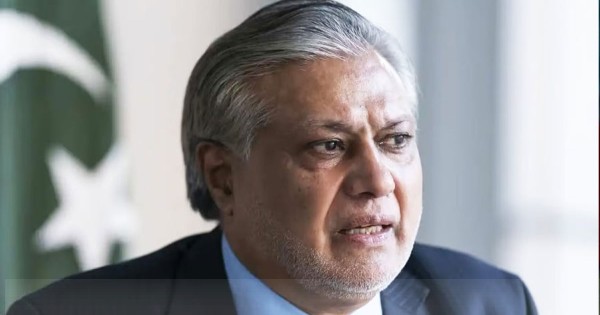
During a recent event in Washington, Pakistan’s Deputy Prime Minister Ishaq Dar said his country does not oppose the U.S. decision. He stated that if the U.S. has proof of TRF’s involvement in the Pahalgam attack, Pakistan welcomes the action.
However, Dar denied any links between TRF and the banned terror group Lashkar-e-Taiba. He insisted that Lashkar no longer exists and that Pakistan dismantled the group long ago. According to him, its members are either jailed or inactive.
This is a notable shift from Pakistan’s earlier stance. Previously, the country had avoided labeling TRF as a terror outfit and had even defended the group publicly. The recent reversal has sparked global interest.
The U.S. decision to include TRF in its Foreign Terrorist Organization (FTO) list and the Specially Designated Global Terrorists (SDGT) list is seen as a strategic move to combat global terrorism. It aligns with India's long-standing position.
In its official statement, the U.S. government emphasized that the step was taken in the interest of national and international security. It also noted India’s repeated calls for stronger international cooperation against terrorism.
The statement further explained that the designation of TRF as a terrorist organization highlights the growing partnership between the United States and India in fighting terrorism. It called the decision timely and necessary.
India welcomed the move, calling it a reflection of close Indo-U.S. cooperation in counterterrorism. New Delhi has long accused Pakistan of sheltering terror groups that carry out attacks in India, especially in the Kashmir region.
TRF, believed to be a proxy of Lashkar-e-Taiba, came into prominence in recent years and has been blamed for several violent incidents in Kashmir. Its emergence is viewed by Indian officials as a rebranding effort by older terror networks.
Following the U.S. announcement, Pakistan initially tried to defend TRF. Ishaq Dar said the group was not considered illegal by his government and demanded proof of its involvement in terrorism before accepting any such label.
He stated clearly that if any solid evidence was provided linking TRF to the Pahalgam attack, Pakistan would accept the claims. However, until then, they would not acknowledge the accusations.
This defensive stance drew criticism from global observers, especially as it contradicted Pakistan’s earlier promises to crack down on terrorism and cooperate with the international community.
However, within days, Pakistan changed its position. Under international pressure, especially from Washington, Islamabad shifted to a more cooperative tone, acknowledging the U.S. decision without objection.
Global security experts believe that Pakistan’s sudden change of tone is not accidental. According to many analysts, U.S. diplomatic pressure played a critical role in forcing Pakistan to soften its earlier defensive attitude.
The shift in tone also reflects the fragile diplomatic position of Pakistan, which relies heavily on international support, especially from countries like the U.S. for financial aid and geopolitical backing.
The Shehbaz Sharif-led government has been under scrutiny for its handling of extremist groups operating within its borders. Many international watchdogs have criticized Pakistan’s inconsistent policy on counterterrorism.
This latest development shows that global powers, particularly the U.S., are now less tolerant of Pakistan's leniency towards certain militant groups. The clear message is that indirect support or ambiguity will not be acceptable.
TRF’s designation as a terrorist group could lead to stricter financial sanctions and greater surveillance. It also means that any support, financial or logistical, from any source will now be considered illegal under U.S. law.
The development also puts pressure on other countries to take similar steps. Once the U.S. classifies a group as a terrorist organization, many of its allies often follow suit, strengthening international efforts to cut off terror funding.
While Pakistan has not yet officially declared TRF as a terrorist organization domestically, the recent change in tone suggests that further actions may be on the way. The international community will be watching closely.
The broader question now is how Pakistan will handle other groups operating within its territory that have faced similar allegations. Will this be a one-time adjustment or the beginning of a broader shift in policy?
As the situation unfolds, countries like India will likely continue pushing for more decisive action against all terror networks, especially those they claim operate from Pakistani soil under new identities.
Pakistan’s cooperation in this matter could improve its international image and relations with key partners. However, inconsistency or backtracking may lead to renewed isolation or sanctions from global institutions.
Only time will tell whether this shift marks a genuine change or a temporary move to ease diplomatic pressure. What remains clear is that the world is no longer willing to tolerate vague stances on terrorism.