

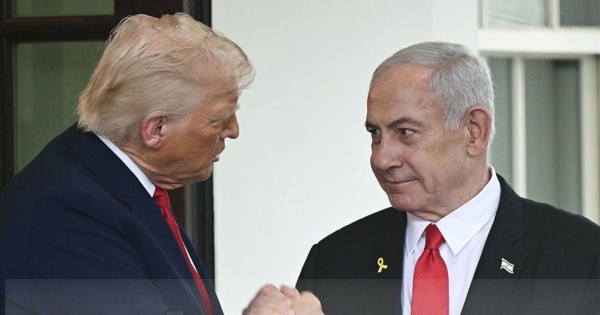
U.S. President Donald Trump has expressed strong support for Israel’s military campaign in Gaza and has rejected Hamas' conditions for a ceasefire. He has called for a quick resolution to the ongoing conflict, stating that Hamas has no real interest in peace.
For over six months, efforts to establish a ceasefire in Gaza have failed. Despite continuous diplomatic attempts, peace remains distant. Israel has continued its military operations in Gaza, aiming to eliminate the Palestinian militant group Hamas.
President Trump has now given public backing to Israel’s actions. He criticized Hamas for refusing to engage in serious peace talks and accused the group of preferring violence over negotiation.
According to Trump, Hamas has repeatedly rejected opportunities for peace and has no desire to reach any agreements. He stated bluntly, “Hamas doesn’t want to make any deals. I believe they actually want to die.”
Just two weeks ago, Trump had claimed that Israel was ready for a 60-day ceasefire in Gaza. However, no such pause in fighting has taken place on the ground. The situation remains highly unstable, and the violence continues.
The United States had earlier offered a proposal to Hamas, reportedly including terms for a temporary truce and the release of hostages. Trump warned that if Hamas did not agree to the deal, the consequences would be serious.
However, Hamas rejected the terms of the U.S.-backed proposal. According to sources, Hamas insisted on a permanent ceasefire from Israel before releasing any Israeli hostages. The group argued that without a lasting peace commitment, they would not agree to any release.
With negotiations stalled, the U.S. has decided to pull back from direct mediation efforts. Trump's special envoy to the Middle East, Steve Witkoff, confirmed this shift in approach. He stated that Washington would now explore alternative methods to bring the hostages home.
This new stance from the U.S. suggests a clear pivot. Instead of acting as a mediator, the American administration appears to be aligning more openly with Israel's military strategy.
Hamas has accused the U.S. of enabling Israel’s continued military operations in Gaza. The group believes American support has emboldened Israel to avoid committing to a permanent ceasefire.
Previously, Trump had even issued warnings about occupying Gaza, hinting at deeper involvement if Hamas did not surrender or cooperate. These comments have added to the tension in an already volatile situation.
The conflict in Gaza has taken a heavy toll. Thousands of civilians have been killed or injured. Infrastructure has been severely damaged, and humanitarian aid efforts have been disrupted due to ongoing attacks.
Despite growing international calls for peace, there is little sign of a breakthrough. The failure of both sides to agree on terms continues to prolong the suffering of innocent people caught in the middle.
Israel maintains that its operations are necessary for national security. It argues that Hamas must be dismantled to ensure long-term peace in the region. The Israeli government has repeatedly stated that any ceasefire must include Hamas disarmament.
On the other hand, Hamas claims it is defending Palestinian rights and territory. The group insists that Israel must commit to ending the occupation and blockades before any lasting peace can be achieved.
The international community remains divided. While some countries support Israel's right to self-defense, others criticize the scale of military action and urge restraint. Humanitarian organizations have also called for urgent protection of civilians.
With the U.S. stepping back from mediation and taking a firmer stand alongside Israel, the possibility of a negotiated peace in the near future seems less likely. The current U.S. policy reflects frustration over stalled talks and Hamas' refusal to accept the proposed deal.
Trump’s latest comments suggest that the U.S. will now focus more on supporting Israel's goals rather than pursuing dialogue with Hamas. This change in policy may lead to a further escalation of conflict in the region.
For now, the people of Gaza and Israel continue to suffer the consequences of failed diplomacy and unending war. International pressure may grow, but without agreement from both parties, peace remains out of reach.
The future of the region now hinges on whether any new diplomatic or military developments can shift the current deadlock. Until then, the cycle of violence and retaliation is likely to continue.