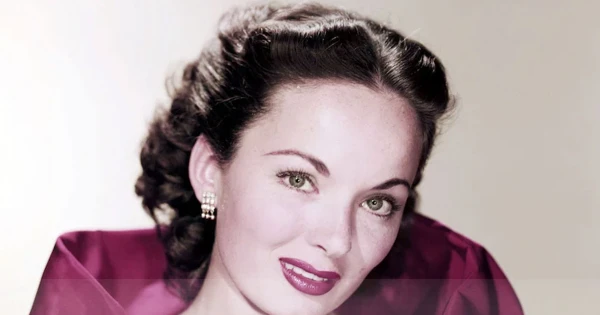
Los Angeles — Ann Blyth, the Oscar-nominated actress whose chilling portrayal of a scheming daughter in the 1945 classic "Mildred Pierce" cemented her place in Hollywood history, has passed away at the age of 98. The actress, who balanced a successful film career with a life away from the spotlight, died Wednesday of natural causes, according to reports from local media.
Blyth earned her place in cinematic history with her performance as Veda Pierce, the manipulative and ungrateful daughter of Joan Crawford's title character in the film noir masterpiece. The role earned the then-teenage actress an Academy Award nomination for Best Supporting Actress, marking the only Oscar nomination of her distinguished career. Crawford, who had recently departed MGM and personally championed Blyth's casting, appeared alongside the young actress in her screen test—an unusual gesture of support that helped secure the part.
Reflecting on the opportunity years later, Blyth acknowledged the significant role Crawford played in launching her career. The actress noted that the industry's top stars rarely extended such professional courtesies to newcomers, making Crawford's involvement all the more meaningful. The gamble paid off handsomely: while Crawford took home the Best Actress Oscar for her performance, critics singled out Blyth's work as equally remarkable.
Kendall Jenner Reportedly Protecting Jacob Elordi From Intense Family Spotlight as Romance Deepens

Film reviewers at the time praised the young actress's nuanced understanding of one of the most difficult roles ever committed to screen. Critics observed that only Crawford's undeniable star power and dramatic skill prevented Blyth from completely stealing the film—a testament to the teenager's formidable talent and instinctive grasp of complex character work.
Just days after completing production on "Mildred Pierce," Blyth's life took an unexpected and painful turn. A sledding accident near Lake Arrowhead, California, left the five-foot-two actress with a severe back injury that required extensive medical treatment. The incident, which she later detailed in a reflective article, left her in a body cast for seven months, followed by additional months of wheelchair recovery. Despite the physical challenges, Blyth attended the 1946 Academy Awards ceremony, wearing a specially designed gown to accommodate her back brace—a striking display of determination and grace under difficult circumstances.
Beyond her dramatic work, Blyth possessed a remarkable operatic soprano voice that made her a natural fit for Hollywood's golden age of musical theater. She introduced the enduring standard "The Loveliest Night of the Year" opposite tenor Mario Lanza in "The Great Caruso" (1951), portraying the legendary tenor's wife. The film remains one of her most beloved performances, showcasing her vocal gifts to audiences worldwide.
Blyth's musical credits also included major MGM productions such as "Rose Marie" (1954), "The Student Prince" (1954), and Vincente Minnelli's "Kismet" (1955). Her versatility allowed her to move seamlessly between dramatic roles and musical productions, a skill that set her apart from many of her contemporaries. Her filmography also included "Brute Force" (1947), "Mr. Peabody and the Mermaid" (1948), "The Buster Keaton Story" (1957), and "The Helen Morgan Story" (1957), in which she portrayed the troubled singer opposite Paul Newman.
Born Anne Marie Blythe on August 16, 1927, in Mount Kisco, New York, Blyth's early life was marked by both challenge and opportunity. Raised on Manhattan's Lower East Side after her father left the family, she discovered her performing talents at an incredibly young age. By the time she was six years old, she was already singing and reciting poetry on radio programs, demonstrating the natural showmanship that would define her career.
Her formal introduction to the entertainment world came through the San Carlos Opera Company, but her Broadway breakthrough arrived with "Watch on the Rhine" (1941-42), where she played the daughter of Paul Lukas's character. The production enjoyed a successful run of nearly 400 performances, followed by a national tour that brought Blyth and her castmates to the White House for dinner with President Franklin D. Roosevelt—a memorable highlight of her early career.
Universal Pictures recognized Blyth's potential and signed her in 1943. She quickly appeared in a string of musicals including "Chip Off the Old Block," "Babes on Swing Street," "The Merry Monahans," and "Bowery to Broadway," three of which co-starred Donald O'Connor. These early roles helped establish her as a promising young talent capable of handling both musical and dramatic material.
Following the success of "Mildred Pierce," Blyth maintained a steady presence in Hollywood with performances in "Swell Guy" (1946), "Killer McCoy" (1947), "Another Part of the Forest" (1948), "Top o' the Morning" (1949), "The Golden Horde" (1951), and "The World in His Arms" (1952). Her post-"Mildred Pierce" career also included "All the Brothers Were Valiant" (1953), "The King's Thief" (1955), and "Slander" (1957).
"The Helen Morgan Story" would prove to be her final feature film, despite being considered for the lead role in "The Three Faces of Eve"—a part that ultimately went to Joanne Woodward and earned her the Academy Award for Best Actress. Rather than pursuing further film projects, Blyth transitioned to stage performances, nightclub acts in Las Vegas, and regional theater productions.
Television audiences came to know Blyth through appearances on popular shows including "Wagon Train," "The Twilight Zone," "The Name of the Game," "Quincy M.E.," and "Murder, She Wrote." She also became a familiar face to American viewers through a series of Hostess snack cake commercials during the 1970s, introducing her to a new generation of fans.
Blyth married Los Angeles obstetrician James McNulty in 1953, joining a family with established entertainment connections—McNulty was the brother of singer Dennis Day. The couple built a lasting partnership that produced five children: Timothy, Maureen, Kathleen, Terence, and Eileen. Their marriage endured for more than five decades, until McNulty's death in 2007 at the age of 89.
Throughout her later years, Blyth remained a respected figure in the entertainment community, remembered as much for her professionalism and grace as for her considerable talent. Her career, spanning several decades and multiple entertainment mediums, reflected the changing landscape of American entertainment while consistently demonstrating her remarkable abilities as both actress and singer.
In the years following her retirement from film, Blyth rarely sought attention but remained a beloved figure among classic film enthusiasts and historians. Her work in "Mildred Pierce" continues to be studied as a masterclass in portraying complex, morally ambiguous characters—a performance that introduced a teenage actress to the highest levels of Hollywood achievement and secured her place in cinema history.