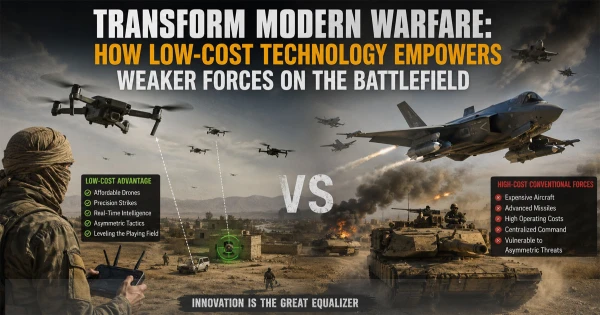
In recent conflicts, unmanned aerial vehicles have emerged as a defining force, reshaping combat dynamics and challenging traditional military hierarchies. What was once a domain dominated by expensive aircraft and advanced missile systems has been disrupted by affordable, precision-guided drones that level the playing field for nations and groups facing superior conventional forces.
Public sentiment in the wake of the intense 12-day Iran conflict in June 2025 reflected a surprising shift. Surveys indicated that a significant majority of Israelis viewed Iran as having achieved a form of strategic success despite heavy losses, while many Americans supported a swift ceasefire. This outcome highlighted broader regional perceptions that the aerial campaign favored Iran's approach over prolonged escalation.
Gulf nations, historically wary of Iran's influence, signaled interest in reconstruction efforts and new security frameworks following the fighting. This rapid pivot underscored how quickly geopolitical alignments can evolve when military realities alter power balances.

Just months earlier, such developments seemed improbable. Long-standing rivalries in the Gulf had positioned Iran as a primary threat. Yet the conflict demonstrated how innovative tactics could force even established powers to reconsider their strategies.
History shows that major wars often act as catalysts for profound change in international relations. From ancient empires to modern superpowers, technological and tactical breakthroughs have repeatedly redrawn maps and alliances. Wars serve as engines of transformation, compelling nations to adapt or risk obsolescence.
The concept of a Revolution in Military Affairs (RMA) captures these pivotal shifts. It refers to rapid changes in technology, doctrine, and organization that fundamentally alter how wars are fought. Earlier examples include the introduction of chariots in the Bronze Age, Roman legions, Mongol cavalry tactics, and Napoleon's corps system. World War II brought Blitzkrieg and atomic weapons, each leaving lasting imprints on global order.
In the current era, drones represent a new chapter in this ongoing evolution. Conflicts in Ukraine and the Middle East have illustrated how these systems deliver decisive advantages, particularly through asymmetric cost dynamics and mass deployment.
One-way attack drones, often called loitering munitions or kamikaze drones, stand out for their efficiency. A single unit might cost as little as $20,000, while intercepting it with advanced missiles can run into hundreds of thousands or millions of dollars. When launched in swarms, they overwhelm air defenses, depleting limited interceptor stocks and forcing defenders into unsustainable expenditures.
Iran's Shahed-series drones, including variants like the Shahed-136, have proven especially influential. Russia adapted and produced its own versions, deploying them extensively against Ukrainian infrastructure. These low-flying, GPS-guided systems evade radar detection effectively due to their small size and altitude profiles. Engines derived from civilian applications keep production costs low, enabling mass output.
In Ukraine, both sides have scaled up drone manufacturing dramatically. Daily production runs into the hundreds, targeting oil refineries, airfields, and supply lines deep behind front lines. Ukrainian forces have used similar systems to strike distant Russian targets, disrupting logistics and economic assets far from the battlefield.
The economic asymmetry is stark. A modest investment in drones can neutralize far more expensive assets, such as tanks, aircraft, or radar installations. This dynamic favors actors with industrial agility and innovation over those reliant solely on high-end platforms.
First-person view (FPV) drones add another layer of precision. Operators control these small, agile systems in real time via video feeds, often using fiber-optic cables to resist electronic jamming. Though range is shorter—typically around 10-20 kilometers—their accuracy against moving targets like vehicles and personnel is remarkable. Costs can drop to just a few hundred dollars per unit when assembled with commercial components.
In southern Lebanon, Hezbollah has employed FPV drones against Israeli armor and positions with notable effect. Coordinated swarms have targeted tanks, personnel carriers, and defensive systems, demonstrating how non-state actors can challenge professional militaries. Similar tactics have appeared across multiple theaters, amplifying infantry capabilities and complicating traditional ground maneuvers.
Technological enablers include advances in batteries, miniature cameras, microchips, sensors, and 3D printing. Many components originate from the commercial smartphone and consumer drone markets, democratizing access. Nations like China have accelerated this through large-scale civilian production, making conversion to military use relatively straightforward for skilled engineers.
Beyond hardware, software and tactics evolve rapidly. Artificial intelligence and edge computing promise greater autonomy, allowing drones to identify targets and evade defenses without constant human input or satellite links. This reduces vulnerability to jamming and expands operational possibilities in contested environments.
Defensive countermeasures have also advanced. Operators now use machine guns from World War II eras alongside modern electronic warfare, nets, and interceptor drones. However, the sheer volume of low-cost attackers continues to strain even sophisticated systems, as seen when air defense munitions ran low during peak exchanges.
The broader implications extend to geopolitics. By strengthening defensive postures and enabling sustained pressure, drones complicate offensive operations for larger powers. They empower smaller states and groups to impose costs disproportionate to their resources, potentially deterring aggression and encouraging diplomatic resolutions.
In the Iran conflict, the threat to oil shipping through the Strait of Hormuz, combined with drone and missile barrages, contributed to de-escalation. Regional players recognized the risks of prolonged attrition against resilient, low-cost threats.
Looking ahead, experts anticipate continued integration of AI, swarming algorithms, and multi-domain operations involving air, sea, and ground unmanned systems. This will demand new doctrines, training, and organizational structures across militaries worldwide. Nations must invest in rapid adaptation, domestic production, and resilient command networks to maintain relevance.
The drone revolution does not eliminate the need for traditional forces but integrates with them, creating hybrid capabilities. Reconnaissance drones provide persistent intelligence, while strike variants deliver effects once reserved for expensive manned aircraft or missiles. This shifts the emphasis toward quantity, adaptability, and cost-effectiveness alongside quality.
For global security, the proliferation of these technologies raises important considerations. Easier access could fuel instability in various regions, yet it also offers pathways for deterrence and defense. International efforts may focus on export controls, counter-drone technologies, and norms for autonomous systems.
Ultimately, the battlefield innovations seen in Ukraine and the Middle East signal a new era. Drones have empowered the relatively weaker to challenge the strong, altering calculations of risk and reward in international disputes. As production scales and capabilities improve, militaries everywhere must prepare for a future where unmanned systems play a central, transformative role.
This evolution echoes past military revolutions but unfolds at unprecedented speed due to commercial technology diffusion. Success will belong to those who master integration, innovation, and strategic foresight in this increasingly accessible yet complex domain of warfare.