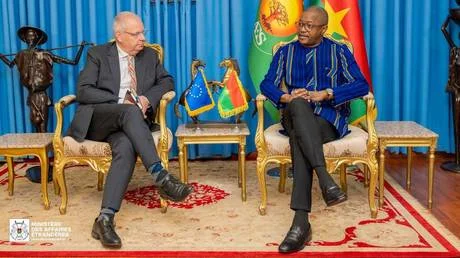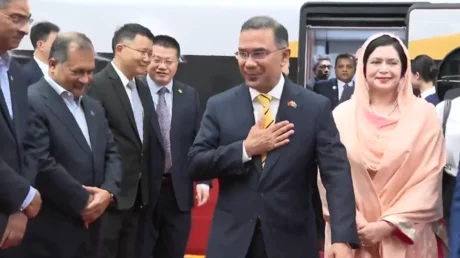
Prime Minister Tarique Rahman also held bilateral talks with Chinese Premier Li Qiang during his first official trip to Beijing Bangladesh and China have signed more than a dozen pacts to deepen cooperation between the two countries during Prime Minister Tarique Rahman’s state visit to Beijing. Thirteen memoranda of understanding (MoUs), spanning various sectors, were signed following talks between Rahman and his Chinese counterpart, Li Qiang, on Thursday. Separately, Chinese textile, fabric, and garment manufacturer Handa Industries agreed to iat the Keraniganj Economic Zone, according to reports.
A pact on the China-Bangladesh Mongla Port Economic Zone, aimed to facilitate the development of the industrial zone adjacent to Mongla Port in Bagerhat, was also signed as part of an Invest Bangladesh seminar. The two prime ministers held bilateral talks focusing on strengthening cooperation in trade, investment, infrastructure development, and other areas of mutual interest. Media reports had said Dhaka was exploring plans to acquire 24 Chinese J-10CE multi-role fighter jets during Rahman’s visit, although there was no announcement on the matter.
China is Bangladesh’s largest overall trading partner, dominating bilateral trade primarily through imports such as industrial machinery, electronics, and textile raw materials. India is Bangladesh’s second-largest overall trading partner, while the US is its single largest export destination. Bangladesh goods worth $18.56 billion from China in fiscal year 2025, while exports to the country stood at $694.49 million.
The US is Dhaka’s biggest export destination, accounting for annual exports of $8.5-$10 billion. The signing of the MoUs assumes significance as a trade deal with the US was signed by Bangladesh’s then-interim government led by Nobel laureate Muhammad Yunus just four days ahead of national elections in February. The provisions of the pact limit Dhaka’s sovereign interests, as it enables the US to if Bangladesh enters into a trade deal with a “non-market country” – a reference Washington uses for China and Russia – the Daily Star reported in February.
The deal also forces Dhaka to automatically align with US sanctions and trade wars, forfeiting its right to remain neutral in great power conflicts. The fear is that if Dhaka breaches the provisions of the deal, Washington may reinstate previously agreed-upon tariffs.